
POST
Magnesium: Complete Guide to Benefits, Dosage, Forms and Safety
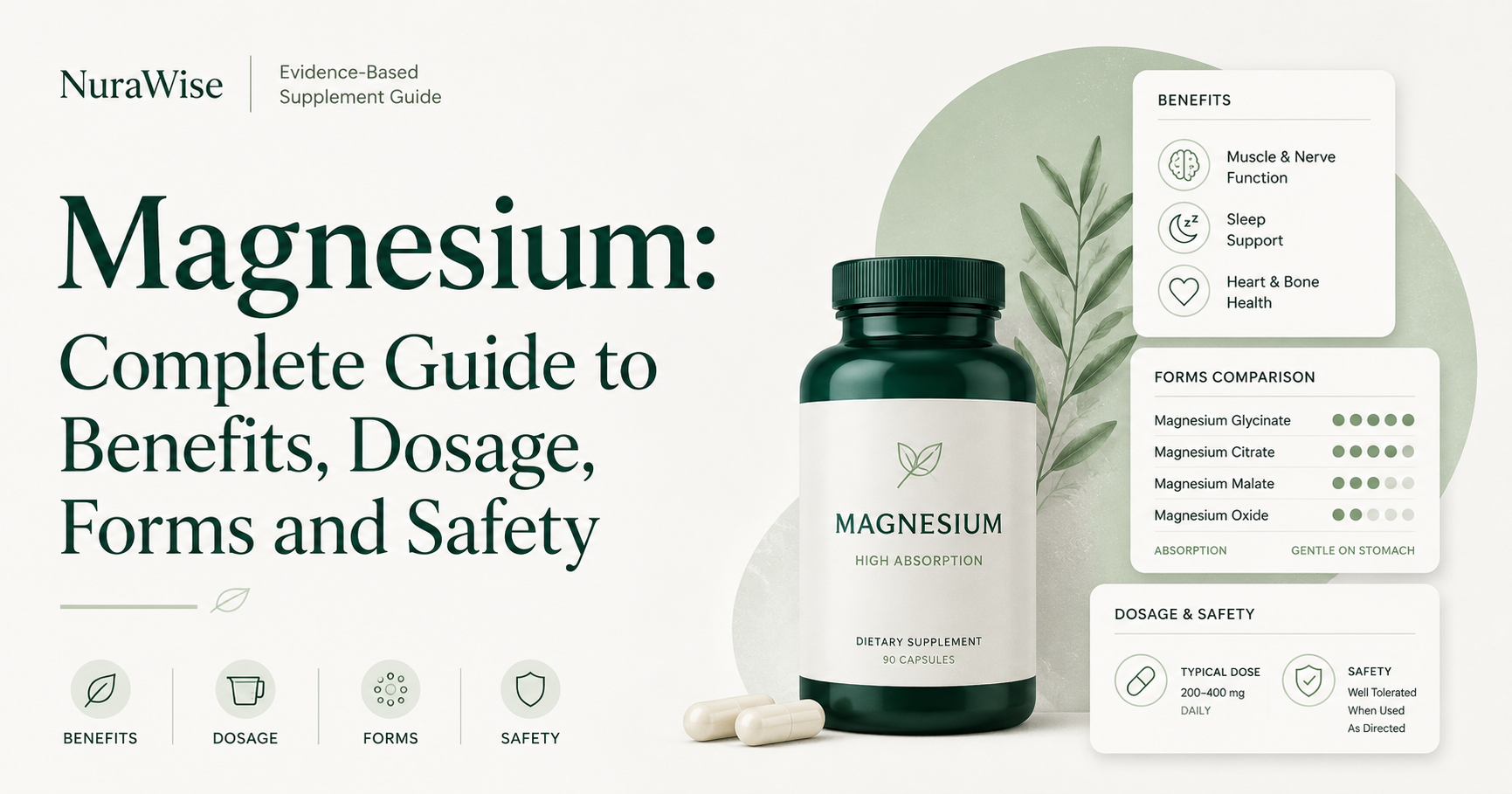
Quick answer: Magnesium is an essential mineral involved in muscle and nerve function, blood glucose regulation, blood pressure regulation, protein synthesis, bone formation, DNA production, and many enzyme-driven reactions. Food should usually be the foundation; supplements can help when dietary intake is inadequate or when a clinician identifies a specific need.
What Is Magnesium?
Magnesium is one of the body’s major minerals. It is naturally present in foods, added to some fortified foods, sold as a dietary supplement, and used in certain medicines such as some antacids and laxatives. The National Institutes of Health Office of Dietary Supplements notes that magnesium participates in hundreds of biochemical reactions and is important to normal muscle, nerve, cardiovascular, metabolic, and skeletal function.
How Much Magnesium Do Adults Need?
In the United States, recommended dietary allowances vary by age and sex. Adult men generally need about 400–420 mg per day, while adult women generally need about 310–320 mg per day. Pregnancy changes the target. These figures refer to total magnesium intake from food, beverages, and supplements—not a recommendation to take that amount from pills.
| Group | Typical U.S. RDA |
|---|---|
| Adult men | 400–420 mg/day |
| Adult women | 310–320 mg/day |
| Pregnancy | Generally 350–360 mg/day for adults, depending on age |
The FDA Daily Value used on U.S. Nutrition Facts and Supplement Facts labels is 420 mg. Daily Value and RDA are related tools but they are not the same thing.
Where Does Magnesium Come From?
Magnesium-rich foods include legumes, nuts, seeds, whole grains, leafy green vegetables, and some fortified foods. A food-first approach also delivers fiber, protein, potassium, and other nutrients that a single-mineral supplement cannot provide.
What Forms of Magnesium Are Sold as Supplements?
Supplement labels may list forms such as magnesium citrate, glycinate or bisglycinate, chloride, lactate, malate, and oxide. The form affects how much elemental magnesium a serving contains, how well it dissolves, and how likely it is to cause gastrointestinal effects. A large number printed on the front of a bottle does not necessarily equal the amount of elemental magnesium.
What Does “Elemental Magnesium” Mean?
Magnesium supplements are compounds: magnesium is bound to another molecule or salt. The Supplement Facts panel should tell you the actual amount of magnesium supplied per serving. That elemental amount—not the total weight of the compound—is the number that matters when comparing doses.
Do Magnesium Supplements Have Proven Benefits?
Magnesium is unquestionably essential, but that does not mean extra magnesium improves every condition it is marketed for. Evidence varies by outcome and by population. Some research suggests modest effects for selected outcomes, while other proposed uses remain uncertain. NuraWise separates the established biological role of magnesium from claims about what supplemental magnesium can accomplish in people who are already magnesium-replete.
Who Is More Likely to Have Low Magnesium Intake or Status?
Risk can be higher in people with certain gastrointestinal diseases, type 2 diabetes, long-term alcohol dependence, and older age, among other situations. Medications can also affect magnesium status. A blood test is useful in some contexts, although serum magnesium does not perfectly reflect total body magnesium.
Can Too Much Magnesium Be Harmful?
High supplemental doses commonly cause diarrhea, nausea, and abdominal cramping. The U.S. tolerable upper intake level for supplemental magnesium in adults is 350 mg per day from supplements and medications; it does not apply to magnesium naturally present in food. This upper limit is designed around gastrointestinal adverse effects, not around an individualized treatment dose.
Very high magnesium exposure can be more serious, particularly when kidney function is impaired because the kidneys normally remove excess magnesium.
Medication Interactions
Magnesium can interfere with absorption of certain medicines, including some antibiotics and oral bisphosphonates. Some diuretics and long-term proton-pump inhibitor use can also alter magnesium status. Timing and dose can matter, so people taking prescription medication should check with a pharmacist or clinician rather than assuming that a mineral supplement is interaction-free.
How NuraWise Approaches Magnesium
We use magnesium as the first NuraWise ingredient cluster because it is a useful test case: there are multiple chemical forms, many marketing claims, a wide range of doses, and a large product market. Our sequence is evidence first, then form and dose, then individual product analysis, then comparisons.
Explore More Magnesium Guides
- Magnesium Benefits: What Is Proven, Promising and Overstated?
- Magnesium Dosage: How Much Do You Need Per Day?
- Magnesium Side Effects: Diarrhea, Interactions and When to Be Careful
- Magnesium Glycinate vs Citrate: Which Form Should You Choose?
- Magnesium Oxide vs Citrate vs Glycinate: What’s the Difference?
- NOW Magnesium Glycinate Review
- Doctor’s Best High Absorption Magnesium Review
Bottom Line
Magnesium is essential, but supplement choice should begin with the question of need – not with a product. Check total dietary intake, understand the elemental dose, compare forms, review medication and kidney-related cautions, and treat condition-specific claims separately from magnesium’s established nutritional role.
Editorial note: This article is for general educational purposes and is not medical advice. Supplement needs vary by health status, diet, medications, pregnancy, kidney function, and other factors. Discuss supplements with a qualified health professional when those factors apply.
Sources
- NIH Office of Dietary Supplements – Magnesium: Health Professional Fact Sheet
- NIH Office of Dietary Supplements – Magnesium: Consumer Fact Sheet
- FDA – Daily Value on Nutrition and Supplement Facts Labels
NuraWise provides educational information, not medical advice. Affiliate relationships do not affect scores or rankings.