
POST
Magnesium Dosage: How Much Do You Need Per Day?
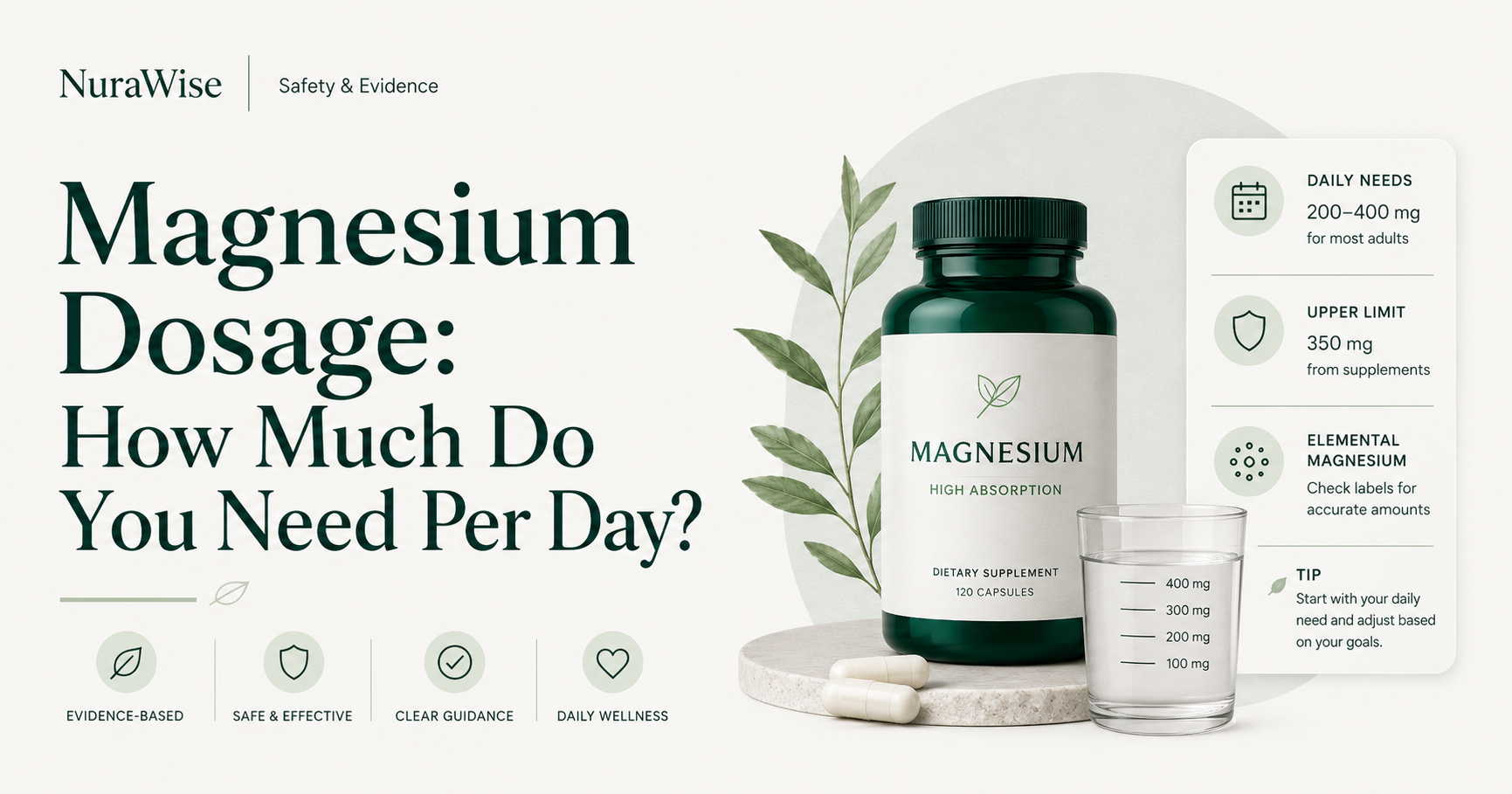
Quick answer: Adult magnesium requirements are generally about 310–420 mg per day in the U.S., depending on age and sex. That target refers to total intake from food, beverages, and supplements. The U.S. upper limit of 350 mg per day applies specifically to magnesium from supplements and medications for adults, not magnesium naturally present in food.
RDA vs Daily Value vs Upper Limit
Three numbers are often confused on magnesium labels. The Recommended Dietary Allowance (RDA) is a population-based intake target. The FDA Daily Value (DV) is the reference used on U.S. labels and is currently 420 mg. The tolerable upper intake level (UL) for adults is 350 mg per day of supplemental magnesium, primarily because higher supplemental intake increases the risk of diarrhea and other gastrointestinal effects.
| Number | What it means | Adult reference |
|---|---|---|
| RDA | Daily intake target that varies by age and sex | About 310–420 mg/day |
| FDA Daily Value | Label reference value | 420 mg |
| Supplemental UL | Upper limit from supplements/medications, not food | 350 mg/day |
Why the Front Label Can Be Misleading
A bottle may emphasize the weight of a magnesium compound, but the dose that matters nutritionally is the elemental magnesium listed in the Supplement Facts panel. For example, a serving containing 2,000 mg of a magnesium chelate does not necessarily provide 2,000 mg of magnesium. The elemental amount may be only a fraction of that weight.
How to Read a Magnesium Supplement Facts Panel
- Find the serving size first.
- Find the line labeled Magnesium.
- Use the amount in milligrams on that line as the elemental magnesium dose.
- Check % Daily Value as a secondary reference.
- Then identify the magnesium form in parentheses, such as citrate or bisglycinate.
Do You Need the Full RDA From a Supplement?
Usually not. Food intake counts. If a person already consumes 250 mg of magnesium from food, a supplement should not automatically be sized to provide another 310–420 mg. The relevant question is the gap between actual intake and individual need.
When Higher Doses Appear in Research
Clinical trials sometimes use doses above ordinary over-the-counter self-supplementation levels. A study dose is not automatically a consumer recommendation. Trial participants may be selected for a specific condition, monitored for adverse effects, and treated for a defined duration.
Who Needs Extra Caution With Dose?
People with impaired kidney function need particular caution because magnesium is cleared through the kidneys. Prescription medicines can also interact with magnesium or alter magnesium status. Pregnant or breastfeeding people and anyone using magnesium for a medical condition should use individualized guidance rather than a generic internet dose.
A Practical NuraWise Dose Checklist
- Estimate food intake before assuming a supplement dose.
- Compare elemental magnesium, not compound weight.
- Start by understanding why you are taking it.
- Check the serving size; two or four tablets may equal one labeled serving.
- Consider gastrointestinal tolerance.
- Review medications and kidney-related risks.
- Recheck the label if the product formula changes.
Bottom Line
There is no single magnesium supplement dose that is optimal for every adult. Use the RDA as a total-intake reference, the FDA Daily Value as a label reference, and the supplemental upper limit as a safety boundary for unsupervised use. The best dose starts with need and total intake, not with the largest number on the bottle.
Related Magnesium Guides
Editorial note: This article is for general educational purposes and is not medical advice. Supplement needs vary by health status, diet, medications, pregnancy, kidney function, and other factors. Discuss supplements with a qualified health professional when those factors apply.
Sources
NuraWise provides educational information, not medical advice. Affiliate relationships do not affect scores or rankings.