
POST
Magnesium Glycinate vs Citrate: Which Form Should You Choose?
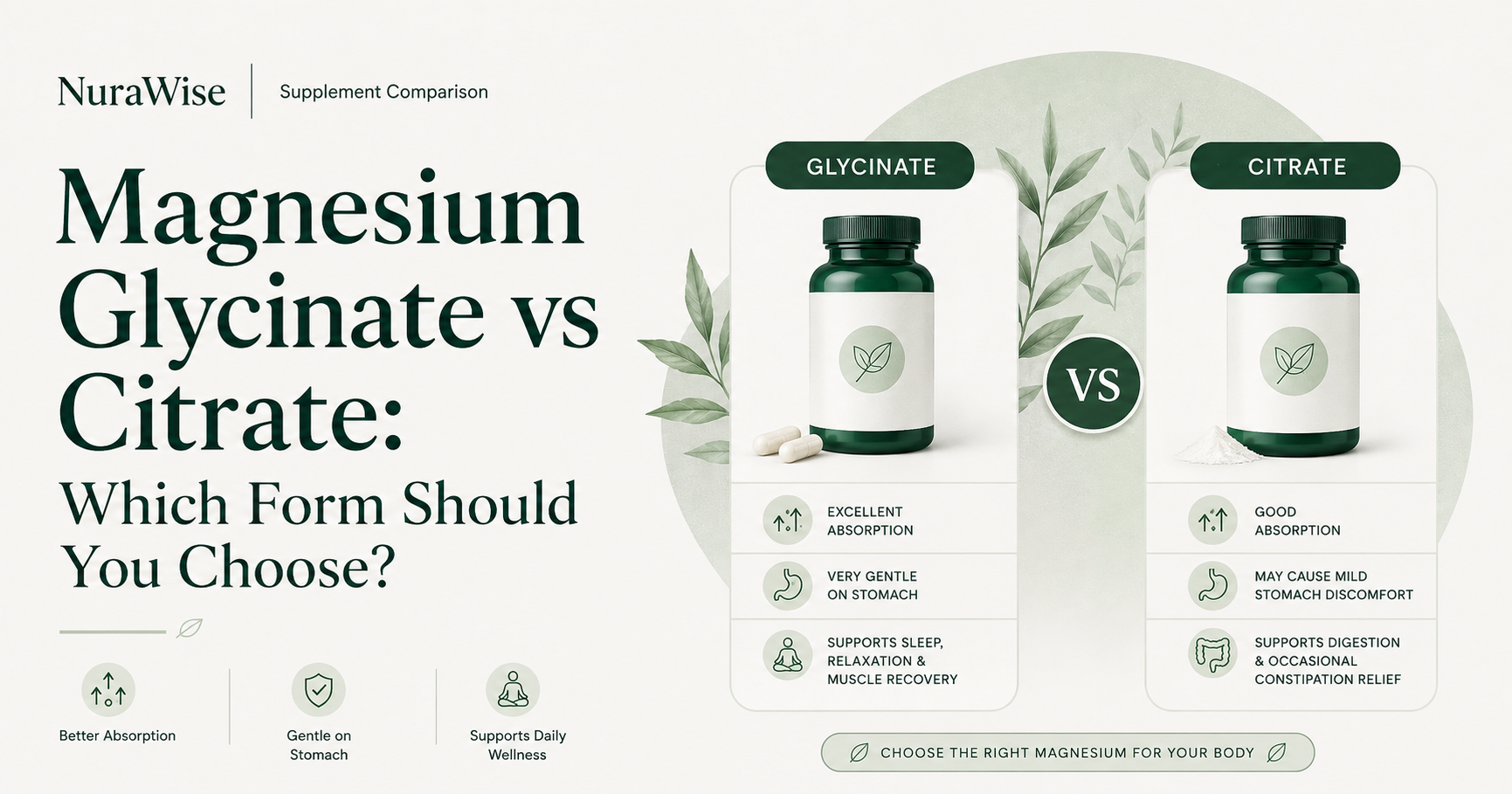
Quick answer: Magnesium glycinate and magnesium citrate can both supply magnesium effectively. Glycinate is commonly chosen when gastrointestinal tolerance is a priority, while citrate is highly soluble and can have a more noticeable bowel effect. The better choice depends on elemental dose, tolerance, purpose, and product quality – not the name alone.
What Is Magnesium Glycinate?
Magnesium glycinate usually refers to magnesium bound to glycine; many labels use the term bisglycinate. Chelated glycinate products are popular because they can provide magnesium in a form that is generally considered well absorbed and often tolerated without as much laxative effect as some other forms.
What Is Magnesium Citrate?
Magnesium citrate is magnesium combined with citric acid. It is a soluble form used both in ordinary supplements and, at different doses and formulations, in products intended to promote bowel movements.
Glycinate vs Citrate at a Glance
| Factor | Magnesium glycinate/bisglycinate | Magnesium citrate |
|---|---|---|
| Typical reason people choose it | General supplementation; GI tolerance | General supplementation; sometimes bowel regularity |
| GI effect | Often marketed and used as gentler | More likely to loosen stools in some users |
| Elemental dose | Depends on product | Depends on product |
| Best comparison metric | Elemental Mg + quality + cost | Elemental Mg + quality + cost |
Which Is Better Absorbed?
Both citrate and chelated forms are generally considered more bioavailable than poorly soluble magnesium oxide. Direct head-to-head evidence between every commercial glycinate and citrate product is limited, however. Product quality, dose, formulation, and the person’s baseline status all affect the real-world result.
Which Is Better for Constipation?
Citrate has a clearer reason to be considered when a bowel effect is desired, because magnesium citrate is used in laxative contexts. But using a mineral supplement to manage persistent constipation without understanding the cause is not the same as routine nutritional supplementation.
Which Is Better for Sleep?
Glycinate is frequently marketed for sleep because glycine itself has biological roles and because glycinate products are often promoted as calming. That marketing narrative should not be mistaken for proof that magnesium glycinate is consistently superior to citrate as a sleep aid. Sleep outcomes depend on population, magnesium status, dose, and study design.
How to Choose Between Them
- Compare elemental magnesium per serving.
- Consider bowel tolerance.
- Check how many capsules or tablets make a serving.
- Look for transparent labeling of the actual magnesium form.
- Consider independent quality certification when available.
- Compare cost per 100 mg of elemental magnesium, not bottle price alone.
Bottom Line
For routine supplementation, both forms can be reasonable. Glycinate may be preferable when minimizing gastrointestinal effects is the priority; citrate may be preferable when a mild bowel effect is acceptable or desired. Neither form should be judged without checking the elemental magnesium dose and the actual product label.
Related Magnesium Guides
Editorial note: This article is for general educational purposes and is not medical advice. Supplement needs vary by health status, diet, medications, pregnancy, kidney function, and other factors. Discuss supplements with a qualified health professional when those factors apply.
Sources
NuraWise provides educational information, not medical advice. Affiliate relationships do not affect scores or rankings.